Enlightenment. The period known as the Enlightenment (age of reason) wa originally viewed as a period of thought and new ideas. However, in reality thinking rapidly descended into the rejection of a God-centred society in favour of man-centred. Many of its leading lights rejected much of the work of St Thomas Aquinas and taught in favour of mathematical science. Descarte, for example, claimed all things must be doubted.
Many of the figures of the Enlightenment attacked faith and philosophy and focused attention on what could been observed and proven. Doubt became the foundation of this period of time.
The church was seen as a place of superstition and illogical doctrines and many were led to destroy it and the structures of the current monarchies. .
Revolutions began with the suppression of the Jesuits, who were expelled from Portugal, then france and Spain.
It was a period of great violence. Many people died, particularly in the French Revolution. Priests and bishops were forced to swear an oath to to the republic. Twenty thousand citizens including priests, brothers and nuns had been beheaded – largely by guillotine.
Many poor peasants of france did not embrace the revolution and some rose up to defend the Church and king.


Modernism took root following the revolutions. During this time some great popes Blessed Pope Pius IX, Blessed Pope Leo XIII and Pope St Pius X. Through their writing and own heroic battles for the Church, they not only ensured the future of Catholic belief and doctrine they clarified many teachings. The First Vatican Council was called to condemn the effects of modernism and steer a clearer way forward for the faithful.
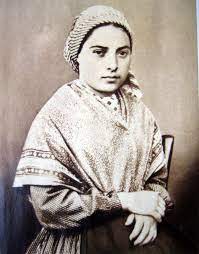
One of the most well known was the the proclamation of the Immaculate Conception of Mary, the mother of Jesus. Mary had appeared to a very poor child Bernadette of a small town in France, Lourdes. On one occasion she told Bernadette she was the ‘Immaculate Conception’, something that was still being discussed and defined by Church leaders at the time.
 Saints that Changed the World