1500 – 1600 AD
Martin Luther. In the sixteenth century, an event shattered the unity of the Church. It is often referred to as the Protestant Reformation. Martin Luther was a very complicated and conflicted man. Luther advocated the complete destruction of the Papacy (popes), the sacramental system and the understanding of divine revelation. Luther wrote much against the Church and expounded his vision for a new Church. Eventually, he broke away and began his own Church. Luther’s main writings contradict Catholic teaching in significant ways. He did not believe in free will, and that good works do not contribute to one’s salvation. This was the beginning of Protestantism. (Lutherism)

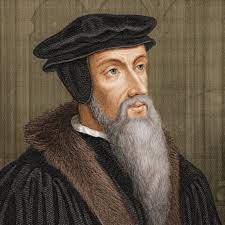
John Calvin. Calvin was another figure in this revolution, who initially followed Luther and then broke away to form his own Church. Calvin’s writings spread throughout Europe and influenced many, including country leaders. Calvin organised and systemised protestant thought. He encouraged rebellion against the Church, and eventually, many followed. (Calvinism)
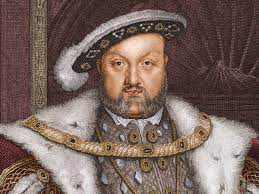
King Henry VIII. Henry VIII is a well-known figure in history as King of England. For a time, he was happily married to Catherine of Aragon, daughter of the Spanish King. She bore him a daughter. Over time he wanted to he took mistresses and eventually demanded an annulment from Pope Clement VII. This was ultimately denied, and Henry declared himself supreme head of the Church in England. He refused to acknowledge the pope as head of the Church and through the efforts of Thomas Cranmer. England separated into the Church of England (Anglicanism)
Nevertheless, the Holy Spirit continued to guide and protect the Church, and many saints came forward to defend and stabilise the extraordinary times. And God always continues to lead the world towards salvation.
Just a few of these are:
Can you match the pictures with the following saints?

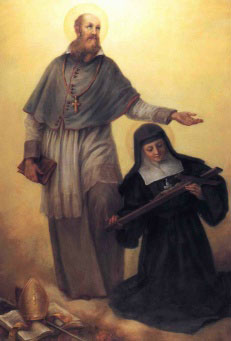
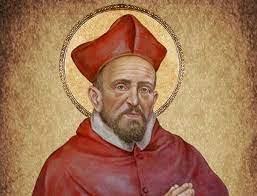
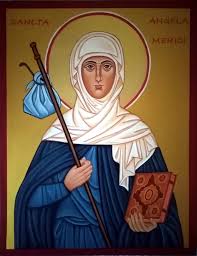


| Saint | About |
| St Angela Merici | Angela Merici or Angela de Merici was an Italian religious educator who is honoured as a saint by the Roman Catholic Church. She founded the Company of St. Ursula in 1535 in Brescia, in which women dedicated their lives to the service of the Church through the education of girls. Wikipedia |
| St Joan of Arc | Joan of Arc, nicknamed “The Maid of Orléans”, is considered a heroine of France for her role during the Lancastrian phase of the Hundred Years’ War, and was canonized as a saint. She was born to Jacques d’Arc and Isabelle Romée, a peasant family, at Domrémy in the Vosges of northeast France. Wikipedia |
| St Thomas Moore 1578 – 1535 AD) | Sir Thomas More, venerated in the Catholic Church as Saint Thomas More, was an English lawyer, judge, social philosopher, author, statesman, and noted Renaissance humanist. He also served Henry VIII as Lord High Chancellor of England from October 1529 to May 1532. Wikipedia He was executed after standing firm against Henry XII who wanted to divorce his first wife. |
| St John Fischer (1469 – 1535 AD) | John Fisher was an English Catholic bishop, cardinal, and theologian. Fisher was also an academic and Chancellor of the University of Cambridge. Wikipedia Also executed for opposing HenryXII’s marriage plans |
| St Teresa of Avila (1515 – 1582 AD | Teresa of Ávila, also called Saint Teresa of Jesus, was a Spanish noblewoman who was called to convent life in the Catholic Church Wikipedia |
| St Robert Bellarmine | Robert Bellarmine was an Italian Jesuit and a cardinal of the Catholic Church. He was canonized a saint in 1930 and named Doctor of the Church, one of only 36. He was one of the most important figures in the Counter-Reformation. Wikipedia |
| St Francis de Sales | Francis de Sales was a Bishop of Geneva and is revered as a saint in the Catholic Church. He became noted for his deep faith and his gentle approach to the religious divisions in his land resulting from the Protestant Reformation. Wikipedia |
 Saints that Changed the World